And so this week’s moment of happiness despite the news.
This week, I’ve been cat-sitting my grandcat, Kubota, my son Andy’s cat. In the weirdest of ironies, Andy, and my son Christopher, Christopher’s wife Amber, my granddaughter Maya, and my daughter-by-proxy Rayne, are away on…a cruise to Alaska. They’re with my first husband, who is celebrating his 25th wedding anniversary with his 2nd wife, and they decided to bring a whole bunch of family with them.
What is it with cruises to Alaska?
I joked with one of my favorite Starbucks baristas that I should have been brought along on that celebration cruise, because my ex and his wife would never have gotten married if it wasn’t for me. Divorcing him, donchaknow.
But anyway. Besides cruises to Alaska, my life lately seems to be full of cats too. There was Cleo’s sudden death. Then the adoption of Poe. And now daily visits with Kubota. So my days and sometimes nights are filled currently with trying to pet Poe (still haven’t been able to, but she’s getting a lot better), yelling at her because she’s gotten comfortable enough to start doing naughty things, encouraging Oliver to teach Poe to be friendly AND good, and running to Andy’s house to feed Bota who initially yells at me because he’s starving, he thinks, and then sitting on the couch with him, listening to him purr. And wondering if my son would notice if I swapped Poe for Bota. Just kidding. Maybe.
But this Bota Boy is someone special. He oozes relaxation vibes. He has owl eyes and a tail that dances and a purr that rumbles his whole body. When I have to leave him, he stares at me, and I really wish I could just bring him home. But he’s not very happy around other cats, or so we were told by his previous owner.
But Kubota has done an amazing thing, though he probably isn’t aware of it. He’s forcing me to take a break every day. At home, I also pat one cat and listen to the purr, but it’s in between as I’m going from here to there, to the next client, the next class, the next whatever. But with Bota, I’m in someone else’s home, and I have to sit down to visit.
I’m visiting in chaos, the chaos that is a bachelor’s apartment. Holy moly. But it’s not my chaos. The only thing I have to do when I’m there is feed Bota and pet Bota and relax into the beat-up bachelor couch.
And it’s been wonderful. When I start to itch to clean that place (actually, to get a forklift, empty it all out, and start over), I just close my eyes. Then there’s only the warmth and vibration of a happy cat on my lap.
When Andy gets home, I may have to arrange a daily, or maybe weekly, Kubota Visit. When my son isn’t there. But I’m pretty sure that once the necessity is taken away, when I don’t really have to visit Kubota for Kubota’s own good, I will start cracking my eyes open to look at my phone, check the time, and start tapping my foot because time’s a’wastin’, and there’s so much to do.
Maybe if I swap the cats…
“Really, Andy, Kubota was always black and white, not tabby and white. And he was always female. And skittish. And naughty. Really. You just don’t remember because you’ve spent a week looking at whales.”
Maybe.
But those moments of sitting on that couch this week, ignoring chaos that isn’t my chaos, and petting a cat…lovely. Just what I needed.
And yes, that helps. Despite. Anyway.
My favorite photo of Kubota. He’s a little bit different. And there’s nothing wrong with that.Bota this week, while I’ve been caring for him.Oliver and me.The lovely photo of Poe taken by the humane society, which didn’t give us any warning of what we were in for.Poe. Her markings indicate that she is a “cow cat” as opposed to a “tuxedo cat”.Oliver, teaching Poe how to be a good cat.
And so this week’s moment of happiness despite the news.
Yesterday was my birthday. I turned 66 years old, which is amazing to me. I don’t feel like I’m 66. I feel like I am permanently stuck in my forties, particularly 43. That’s the age I always give when people ask what age I would be if I could choose. I loved being 43. It was old enough to be taken seriously (finally!), yet young enough to still feel…young.
The 6s in my age and the year captured my attention. I turned 6 years old in 1966. And now I’m 66 years old in 2026. Something about the 3 6s in my age and the year has just really roped me in.
I remember my 6th birthday really well. I was entranced then too, by “6 in 66”. It wasn’t my “golden birthday”, that wouldn’t hit until I was 29. But 6 in 66…I remember clearly, clearly thinking, Well, it’s all downhill from here.
I was a serious kid.
So now, 66 in 2026. Despite everything that’s happened in the last 2 years, I don’t feel like it’s all downhill from here. In many ways, I feel like I’m shaking off the difficulty of the last two years, similar to a dog shaking off water after a bath. I’m not leaving it behind – Michael will never be left behind – but I’m looking around. I glance at his photo often. But mostly, I look outward.
As much as we complain about social media, there are times it’s a real miracle. Starting the day before my birthday, through the day, and even still today, my Facebook page was deluged with birthday wishes. They came from people I truly know to people who only know me and follow me, through my posts, my books, my teaching, my experiences. Despite the losses of the last two years, it was impossible to feel alone on my birthday. I was surrounded by support, caring, and genuine friendship.
I had dinner in my favorite restaurant with 3 out of 4 of my kids (one lives in Louisiana – hell of a commute) and my only grandchild. I was surrounded, even though the chair directly across from me was empty. That doesn’t mean he wasn’t there.
And here’s the thing – if I hadn’t canceled the cruise I’d scheduled, I wouldn’t have had my birthday dinner with my kids and grandkid. I needed to be with my family.
I know there are people who think I’m crazy for canceling the cruise. I see it as the exact opposite. For a change, I listened only to myself, to what I was telling me. Eight months ago, when I booked that cruise, I thought I’d be able to handle it. I thought I wanted to do it. As the trip got closer, I knew this wasn’t the case at all. With everything that’s happened, I need to be home, to keep a hand on what’s still familiar, still there. Though I was told by many that the cruise would be good for me, I knew it wouldn’t. And when I found myself realizing the night before that I was doing the cruise for others and not for myself, it was time to let it go. To let me go from the expectations of others, and do what I wanted to do.
So I did.
It’s funny, because all the way through this, starting on January 17, 2024, when Michael was struck and run over by the passenger van, people have said to me, “You’re a strong woman. You can do this.” I am a strong woman, I am very aware of that, but on that day and for a long time afterwards, I felt like my strength had been ground to the roadway, run over by the same passenger van that hit Michael. I was asked, and did, many things that I never wanted to do, and that I didn’t feel like I could do.
The hardest of these was to make the decision to remove all life support and transfer Michael to hospice. That haunts me still.
But truly, it wasn’t until I said no to the cruise, a few hours before I was supposed to leave for the airport, that I felt my strength soar back. I was standing up for myself, and I was doing what I knew was right for me.
A good friend who is fighting a cancer diagnosis said today, “Being told I got this and I’m so brave makes me feel like I can’t break down.”
Exactly.
When I took a six-week hiatus from teaching, back in February and March, I stepped back and let it all drop. I let myself break down. I went against everything that people think of me, and I let myself be what I was at that time – full of grief and rage, depleted, scared, confused. And last week, I stepped forward and said no, I thought I could do this, but I can’t, and it’s okay. I have to do what’s right for me, and re-enter my life as I’m able.
Now I’m 66 in 2026, and unlike when I was 6 in 1966, I am not thinking, Well, it’s all downhill from here. I am just looking ahead, all while glancing at Michael’s photo, where it sits across the room from me.
And yes, that helps. Despite. Anyway.
Me, when I just turned 2 years old. Serious child.6 years old in 1966. “It’s all downhill from here.”Me yesterday, on my 66th birthday. 66 in 2026.
And so this week’s moment of happiness despite the news.
Tomorrow, I leave on a trip that I don’t want to go on. I chose it, I arranged it, I thought I’d be ready for it…but now that it’s upon me, I’d much rather stay at home.
It’s been a hard week. I’ve always described myself as a living breathing roller coaster, and that has definitely proven its truth this week. Just last week, in the 7/16/26 blog, I said, “So this is my moment of happiness: that I was too immersed in my life and in what makes me happy to even think about it. It was just what my life is supposed to be.”
And this week? I’m up to my neck in my life and I’m questioning everything. Should I be doing what I’m doing? Am I still effective? Is it time to just put everything down and move on to something else, or is it time to just put everything down and then go sit quietly in a corner?
Sitting quietly in a corner sounds very good right now. Make it a dark corner.
Lately, and lately meaning the last two years, when people ask me how I am, I always give the same answer: “Tired.” Sometimes I change it up and use two words, “Very tired,” or a new word that means the same thing: “Exhausted.” Even when I’m feeling happy, I have a sense of sadness, and trouble just around the corner.
And a sense that I really don’t have a handle of what’s going on in my life at all.
Maybe it’s a mid-life crisis, which would be a good thing, because then I’m going to live to 132 years of age. Maybe it’s just that there’s been a lot of challenges in the last two years, including the loss of my husband. It’s not easy being alone.
Or maybe it’s true that I don’t have a handle on what’s going on.
Either way, tomorrow, I will be flying to Seattle. On Saturday, I will be getting on a gigantic boat and cruising to and through Alaska. A trip I don’t want to take. And I’ll be turning 66 too.
Then again, maybe it’s a good thing that I’ll have a small cabin all to myself, with a balcony that overlooks the ocean. I can sit there with a good book and a cup of coffee and listen to the waves. Or I can put the book in my lap and stare at the ocean, that has always had a comforting shoulder for me before. It’ll be a little bigger than a corner, but it’s all I need, really.
So what is my Moment of Happiness this week?
Well, I did get the first draft of a new story completed. That felt good.
I managed to run my hand down the back of my new cat, Poe.
I’ve slept.
I had my first mani-pedi. Of course, now I’m terrified that I’ll bang my hands against something. And I’m keeping my lovely toes protected in sneakers, so no one sees them but me.
And…I’m still talking. Still watching and waiting for the roller coaster to go back up, the way it always has. The way it always will. I hope.
Hope always rises.
And yes, that helps. Despite. Anyway.
Me walking on the Oregon coast. Photo by Michael.
Thought it would be fun to add a photo of Oliver and Poe.
And so this week’s moment of happiness despite the news…
Oops. I kinda forgot. But I forgot for a good reason! Really!
Today is the first day of the AllWriters’ Annual Retreat, which is my creative writing studio. We’re international – and we offer online and on-site courses and workshops in every genre and ability of creative writing, as well as coaching and editing services. I’m the director and founder. This is our 19th retreat. It would have been our 21st, but we didn’t have one in our first year, because we were just too new. And we didn’t have one in 2020, during the pandemic. But we’ve had one every year besides those.
Writers come from all over the country (this year, Wisconsin, Minnesota, Illinois, Massachusetts, New York, and Texas) to spend four days fully immersed in the writing life. They have already written work put through critique, and they work on new writing without interruption. They’re in the middle of a community…which I would also call family.
And I’m the head of all of it.
This is a massive event to plan and a complicated event to put through its paces. It’s gotten harder without Michael to make sure the background is running smoothly. But I have the support of two of my faculty, Carrie Newberry and Ross Hightower, plus the generous help of my students. By Sunday, I will be depleted…and happy.
So I’ve been running all day, getting students settled, unpacking, putting things where they’re supposed to be, making sure everyone is happy, and giving a lecture. And just now, when I sat down and became aware that I was feeling happy, I remembered the blog.
Oops.
So this is my moment of happiness: that I was too immersed in my life and in what makes me happy to even think about it. It was just what my life is supposed to be.
Whew.
And yes, that helps. Despite. Anyway.
Scene from the 2016 retreat. This is what it’s all about.Michael and Olivia watching me give a reading at the 2021 retreat.Welcome dinner at the 2023 retreat.In my happy place. Teaching at the 2014 AllWriters’ Annual Retreat.
And so this week’s moment of happiness despite the news.
One wouldn’t think that a Moment of Happiness would come from picking up your dead cat’s ashes, but then, I don’t think Moments are predictable. If there’s ever a time to expect the unexpected, it’s with Moments of Happiness.
So my cat Cleo has been gone for two weeks now. You know, I’ve had a cat die at 20 years of age, 18 years, 17 years, 14 years, 8 years…and now 2 years. Not in that order, by the way. The order would be 18 years, 17 years, 8 years, 14 years, 20 years, and 2 years. I’m finding they’re all hard…but Cleo’s death at 2 years just feels profoundly unfair. For her, and for me and my family. Including our cat Oliver.
No death is unexpected. We all know it’s coming, for us and those around us. But at 2 years of age? Ridiculous.
Cleo came home with me when she was 12 weeks old. She was the easiest new cat transition I ever had. She walked in, said hello to Oliver, who was six months older than she was, and made herself at home. She and Oliver were fast friends by the end of that day, sleeping together at the foot of my bed. Their no-limits energy and ability to get in trouble made me dub them The Orange Terror Twins From Different Mothers. Oliver was an orange tabby with short hair. Cleo was an orange tabby with long hair. Oliver could be shy; Cleo was never shy. But together, they were fearless. And happy.
Cleo’s hair was pervasive. Magical. It was there, even when she wasn’t. Every night, when I was done with work, I took a cloth for wiping down laptops, wiped all the Cleo hair (and some Oliver hair) off my keyboard and screen, and shut the lid for overnight protection. Cleo spent the night with me, curled at the bottom of my bed. In the morning, I got up, lifted the lid of my laptop, and found Cleo’s hair scattered over every letter.
When I asked her how, this happened, she just flicked her tail and smiled.
If I picked up a pen, a fork, a piece of paper, a muffin, I’d have to pull off a Cleo hair. There were Cleo hairs in my car, my closet, my shoes, and I even found one on a brand new roll of toilet paper.
Flick. Smile.
Two weeks ago, Cleo spent all day at the emergency vet. Overnight, she went from her normal active self to sprawled on the floor with no interest in food, water, playing, or Oliver. The emergency vet said she had fluid around her lungs and around her kidneys. They were suspicious of a nodule in her lungs. Ultimately, they sent us home with anti-nausea medicine, Gabapentin for the pain, and an appetite stimulant, and orders to bring her for a follow-up with her regular vet.
That was a Thursday. On the following Tuesday, Olivia and I brought her in for her follow-up. She still hadn’t eaten, and never voluntarily drank. I resorted to using a syringe to put water down her throat every hour, and I also added chicken broth, in the hope of revving up her appetite. She moved slowly around the house. It wasn’t until after her death that I realized she was visiting all of her favorite spots one more time. When the vet came in to see her, we found that Cleo’s temperature was dropping. She was cold. And despite not eating, she’d gained 2 pounds, all in fluid. She sprawled on the table, not even able to pull her legs under her.
The vet thought it was Feline Infectious Peritonitis. Because Cleo had Feline Leukemia, she was more prone to illnesses and disease. One led to the other.
I explained to Olivia that we had to let Cleo go. It’s been a rough two years, with our cat Edgar (14 years) dying in February 2024, our cat Muse (20 years) dying in April 2024, Michael dying in June 2024, our dog Ursula dying in September 2025. And now Cleo. At 2 years old.
The vet additionally explained to Olivia that Cleo was very sick and she was suffering, and there really wasn’t any hope. I told Livvy that I trust our vet.
She administered the sedative in preparation for the final injection. But before we even got that injection, Cleo started leaving us. She was gone a few minutes later.
I am very tired of grief and of being sad.
I arranged to have Cleo cremated and wondered that night just what would happen to all of these little urns of ashes I’ve accumulated over the years. In all, I have ten. Jake, Einstein, Corny, Cocoa, Blossom, Penny, Donnie, Edgar, Muse, and now Cleo.
And of course, Michael.
Yesterday, I got the phone call that Cleo was ready to come home. I picked her up. Her ashes are in a pretty little wooden box. I was also given another package, which was wrapped in a cardboard sleeve. I carefully slid a small black box out. There was a lid that clicked tightly shut. I opened it slowly.
Inside was Cleo’s big pawprint, pressed into a mold and sealed with a clear plastic cover.
And…a scattering of Cleo hair. Not inside the plastic cover. On the outside. Like the magical hair that appeared under the laptop cover.
I laughed out loud. “How?” I said. “How do you do this, Cleo?”
Wherever she is, I’m sure she looked at me, flicked her tail, and smiled.
And yes, that helps. Despite. Anyway.
Oliver and Cleo.Cleo on her 2nd birthday in April.And by the way, we have a new kitty. Her name is Poe. More on her soon.
And so this week’s moment of happiness despite the news…one day late. Longer than normal too.
Lordy. I said I would write this today, since I ran out of time yesterday, and I am. At 7:30 at night. And I’m just eating lunch now.
That should give you an idea of what my week has been like. Part of the busy is a new cat in my family. An 11-month old black and white female nervous tornado named Poe (not named by us, but by the animal rescuer who found her and her siblings, brought them to a cat rescue, who in turn brought them to Elmbrook Humane Society, the only humane society in my area that tests the cats for feline leukemia before they place them). Michael’s favorite non-living author was Edgar Allen Poe, which was why our cat Edgar’s whole name was Edgar Allen Paw. Seeing a cat named Poe, who also had the restriction of only being available for adoption to someone who already had a cat in the house, and our having Oliver, who was lonely and missing Cleo, well, it seemed like a huge arrow darted out of the sky and said, THIS ONE! So far, she absolutely adores Oliver. She’s not so sure about me or Livvy. We’ve had her since last Monday, and neither of us has managed to pet her yet. She has sniffed my fingers, and she will come to Oliver when he’s leaning against my legs, so we’re making progress. But she’s a super-hider, and so quite a bit of time has been spent on fruitless searches. Whew.
There’s also the AllWriters’ Annual Retreat to prepare for, coming up on July 16 – 19, and the venue let me know last Friday that our usual gathering room is now being used as an exercise room, but “we have plenty of space for you.” When I emailed back questioning this, I received an automatic reply, stating that the person was out of the office until after the 4th of July.
Sigh.
BUT – yes, there was still a Moment. A couple of them, in fact.
I’m going to talk about dreams. There are two kinds, really. The kind of dream you have when you’re conscious, and you’re dreaming of goals you’d like to achieve. And there’s the dream you have when you’re sleeping, so you’re not really conscious, and you’re surely not in control. Both of these types of dreams gave me Moments this week.
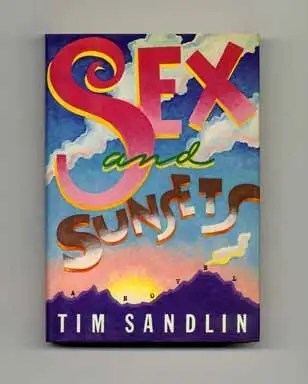
So the conscious one first. Way back in 1987, when I was publishing short stories and becoming known as a short story writer, but no book yet, I read author Tim Sandlin’s first novel, Sex And Sunsets, and promptly fell in love with him. In his third novel, Skipped Parts, he included a note to readers, saying if you wrote him about the book, he would send you a picture postcard of the Tetons (he lived in Wyoming) with a note from him. I did, and he did, and we struck up a dialogue that lasted until his death last March, soon after the release of his final novel, Lit.
In that original postcard, which I still have, Tim wrote, “Dear Kathie, This is actually a picture of the Gros Ventres, but you can see the Tetons if the photographer turned around. Most of my female readers (at least the ones I hear from) think I’m one of the only males who understands them. Or at least tries to. I’m accused by critics of being a feminist. One female reviewer said any man who writes from the viewpoint of a woman is a rapist – so I didn’t please her, but for the most part, women aren’t offended. At least not enough to tell me. Writing is hard enough work. If you tell what you see as the truth, you can’t worry about who you offend. Good luck in your writing. I’ll look for your name.”
I’d written to him about my penchant of writing about difficult subjects. I have held his words, “If you tell what you see as the truth, you can’t worry about who you offend,” close to my chest ever since then. Tim apparently kept my name close too, because he did watch for me, and I always had a message from him after one of my books appeared.
Tim went on to start the Jackson Hole Writers Conference, growing it from a modest meeting of local authors to a highly successful and premier literary gathering. He led it for over three decades, and the event will celebrate its 35th anniversary this year.
To say I’ve wanted to be a presenter at this conference is an understatement. It’s been my goal since it started. But I never felt comfortable asking Tim about it, because I felt that was taking advantage of our relationship.
Well, as you’ve probably guessed…I’m going to be at the Jackson Hole Writers Conference in 2027. I met last Monday with the current director, via Zoom. He’d heard of me through Tim, and also through one of my very enthusiastic students who lives out there. He’d told me that the 2026 event was already booked, so I wasn’t sure why he wanted to talk now. But partway through, he suddenly said, “How’d you like to be a presenter in 2027?”
Ohmygod.
Goal achieved. Dream achieved. And I’ll get to stand where Tim stood, and speak where he spoke, and I’ll get to see the area he loved so much. If you’re talking to me and I suddenly burst out into the silliest of grins, it’s because I’m thinking of Jackson Hole and 2027.
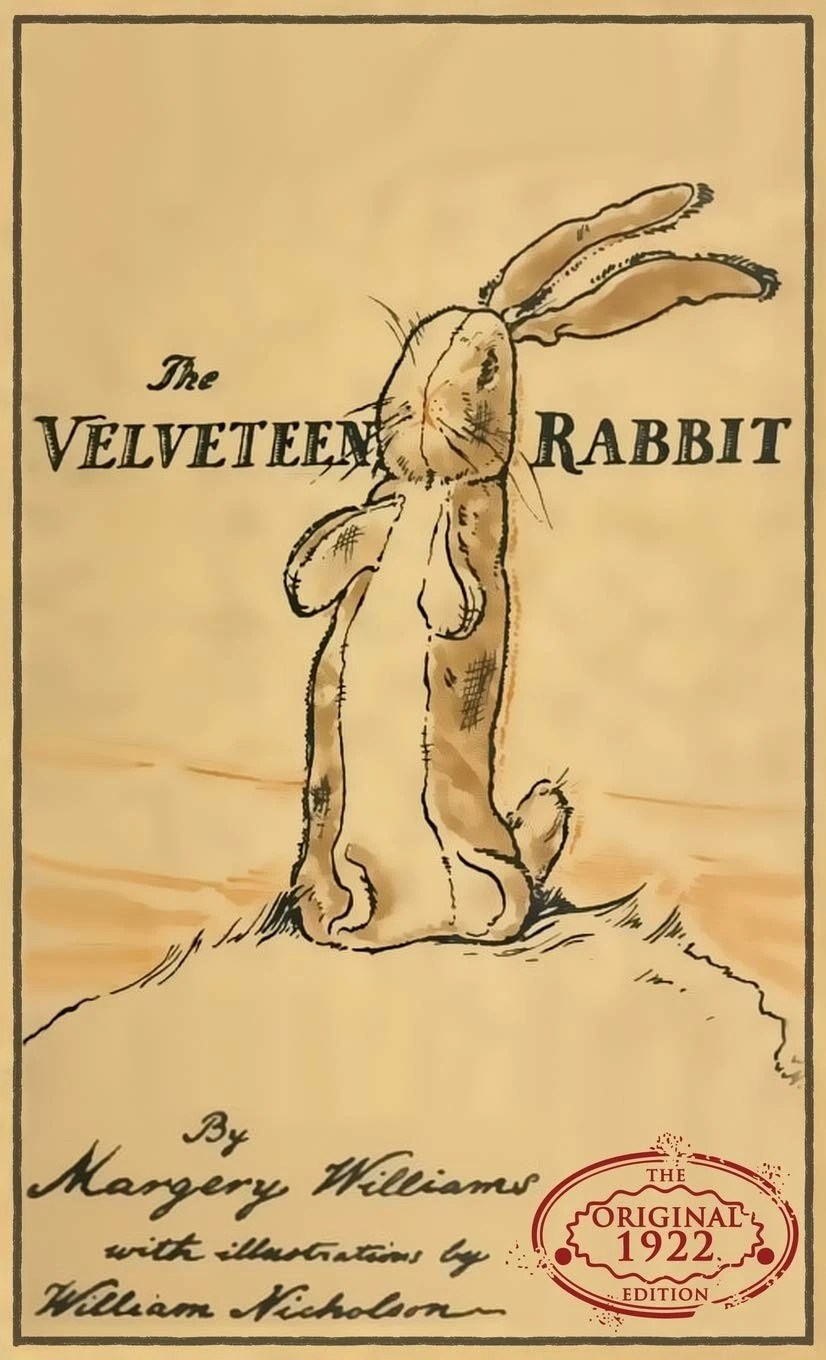
And then a sleeping dream. I was extremely puzzled a few mornings ago when I woke up after a weird dream. I was sitting at the AllWriters’ classroom table, and in front of me, I had a huge pile of stuffed rabbits. Specific rabbits…they were all, I knew, the Velveteen Rabbit, from the children’s book of the same name, by Margery Williams, originally published in 1921. I was cutting out red velvet hearts and amazingly sewing them onto the backs of these stuffed rabbits (I don’t sew. I am famous for stapling my oldest daughter’s Brownie and Girl Scout badges to her sash.). Once sewn on, the red hearts looked like angel wings on the rabbits, if you looked at the rabbits straight on. In the dream, Olivia came into the room, looked at all the rabbits, and asked me what I was doing. “I’m remembering your father,” I said. And then I woke up.
Remembering Michael? As far as I know, there is no connection between Michael and rabbits. He never liked rodents, including Mickey Mouse, even though he grew up in Florida. When Michael and I first got together, two of my kids had guinea pigs…and Michael couldn’t bring himself to touch them.
So I thought about this for a few days. I’ve wondered, of course, if some of the things I’ve experienced since Michael’s death were real. I want them to be, of course. I’ve also been very conscious of not wanting to turn Michael into a saint. He wasn’t, and I’m not, and our marriage wasn’t perfect. A lot of the reviews of The Birth Of A Widow have brought up the intense love that I express in the poems. In the most recent review, by a lovely woman named Nicole Pyles who took part in the blog tour of Widow, she said, “Her poems and some essays reflect the complexities of grief, memory, loss, and, most of all, love.”
Love. Now I have to tell you, one of the unexpected aspects of grief is the rise of the question of reality. Am I remembering Michael accurately? Did we have a wonderful, imperfect marriage? Am I missing the real person, or just the role of being a wife and having a husband?
The mind works in really, really weird ways. Add being a writer to that, and well, it can get messy in my brain.
So, The Velveteen Rabbit. The main storyline of the book is that an old, beloved stuffed animal, the Velveteen Rabbit, wants to become real. And he thinks he can become real through the love of the child, who is now grown. This is the line from The Velveteen Rabbit that I remember the most. I once took a photo of all the beloved stuffed animals from my childhood, sitting on a bench in my bedroom. When I had the photo printed, I framed it with this quote beneath it:
“Real isn’t how you are made,” said the Skin Horse. “It’s a thing that happens to you. When a child loves you for a long, long time, not just to play with, but REALLY loves you, then you become Real.”
And now, here I was, in my dream, attaching hearts like wings to Velveteen Rabbits, and wondering about reality.
I loved Michael, I still do, and Michael loved me. Most everything that I’ve accomplished has happened since I met and married Michael. I was no longer squashed, cut down, made to feel less than. I was loved, I was respected, I was believed in. I became me. I became Real. And Michael became Real too. Our love for each other was Real, because we weren’t perfect. We didn’t just play. Even through the hard parts, even when those hard parts were our relationship, or one of us, we still loved, and we still stayed together.
Real.
I need to find a Velveteen Rabbit. And then I will staple a red velvet heart to its back.
And yes, that helps. Despite. Anyway.
Tim Sandlin’s first book, Sex and Sunsets.Tim’s last book, Lit.Tim.The Velveteen Rabbit.This is the Velveteen Rabbit I had as a child. He was part of the photo I took. I no longer have him.
Hey, all – I am caught up in a whirlwind of work, and I wouldn’t be able to get to writing This Week’s Moment Of Happiness Despite The News, until 8:00 tonight. Which is crazy. So I’m just going to write and post it tomorrow.
And so this week’s moment of happiness despite the news.
Hooboy.
So last week, I didn’t post. I’d spent all day at the emergency vet clinic with my cat, Cleocatra (Cleo), who was suddenly very, very ill. She was her normal self on Monday, but when I got up on Tuesday, she was flat out on the floor.
Cleo had Feline Leukemia. I didn’t know this on the day I adopted her, when she was just 12 weeks old. The humane society I adopted her from didn’t test their cats – and I didn’t know that. When I brought her in for her first vet appointment a few weeks later, I found out. My vet gently suggested I return her, but by then, we were bonded, and there was just no way.
Feline Leukemia causes a weakened immune system. The average lifespan after diagnosis is 2 years. Cleo turned 2 years old in April.
What followed was a week from hell, which culminated in a visit to my vet. Cleo’s body was shutting down. She was actually in death throes on the table, my arms circled around her, as the vet gave her the injection.
To say I’m devastated is an understatement. Cleo and Oliver, who I dubbed The Orange Terror Twins From Different Mothers, helped me so much through the last two years. Oliver was adopted shortly before Michael’s death, Cleo shortly after.
This isn’t, as they say, my first rodeo. On the top shelf of my closet, there are several versions of urns, and behind my desk, on a bookshelf, there are urns for the three pets who died in 2024 and 2025, two before Michael, one after.
The cats are:
Jake
Einstein
Cornelius (Corny)
Muse
Edgar Allen Paw
The dogs are:
Cocoa
Blossom
Penny
Donnie
Ursula
And of course, in my living room, on my piano, is the urn that holds Michael.
When I was born and brought home from the hospital, there was a dog named Cindy. When I was eight years old, a cat entered my life, named Spooky. There has always been at least one animal under my roof and in my family. I put myself through college by working at a local humane society (the one I adopted Cleo from). My first published articles were in the official magazine of the Humane Society of the United States, and in their magazine for kids, called KIND (Kindness In Nature’s Defense).
Out to dinner one night during a college break, my father looked at me and said, “I hope a day comes when you love people as much as you love animals.” I remember my jaw dropped. To me, there was no difference in the amount of love I extended to people and animals. There was no “loving more”. There was only love.
Since Michael was struck by the passenger van on January 17, 2024, it seems like my life has been shrouded in loss. In death. In February 2024, Edgar Allen Paw, then 14 years old, died. In April 2024, one day after her 21st birthday, Muse died. Michael died in June 2024. In August 2025, my grandcat Alfadore died. In September 2025, my dog Ursula, approximately 11 years old, went blind overnight, and then died. The day before Thanksgiving, 2025, my great friend Leslie died on the operating table.
And now…Cleo. Only 2 years old.
It is also an understatement to say that I am sick of death. That I am overwhelmed with grief. And that I am starting to watch everyone, animal or human, with a sense of fear over the possibility of their being lost too.
It’s not a fun way to live. Especially for someone who loves basically everybody.
It’s hard to find a Moment of Happiness in all this. But I am trying.
Last night, as I was in bed, trying to sleep, and wondering what the hell I was going to write about today, my cat Oliver joined me. Since Michael died, Oliver waits until I go to bed, and then he comes to stretch himself out on Michael’s pillow, right beside me. He purrs, and I sleep. Cleo used to do this too, if I woke during the night. It was like it was Oliver’s job to help me go to sleep in the first place, and it was Cleo’s job to help me back to sleep.
Now Oliver does it all.
But as I lay there last night, Oliver reached out a paw and put it on my hand. I put my other hand on top of his paw, and then he put his head down on us both. And he purred.
Oliver is, of course, grieving too.
We both slept.
I have been incredibly lucky to have so many special animals and special people in my life. Because of that, I am also incredibly lucky to love so hard that I grieve just as hard. For some, this amount of loss would mean a withdrawal, a pulling back, a refusal to become close to anyone else ever again.
Not me.
And yes, that helps. Despite. Anyway.
Cleo on her 2nd birthday in April.OliverMe with Cindy.Me with our puppy Debbie.Me with Oliver.And holding baby Cleo.
3:00 p.m. central time: For those watching for This Week’s Moment, it will be late or possibly not at all. I am at the emergency vet with my cat Cleo. I don’t know anything yet. Cleo is only 2 years old, but she has feline leukemia, which makes everything more complicated.
Please send every bit of good wishes, prayers, what-ever-you-do’s for my cat. These two cats, the Orange Terror Twins From Different Mothers, have helped me get through everything horrible thing I’ve had to face in the last two years. The 2nd anniversary of Michael’s death is tomorrow. I don’t know what I would have done without these two. I just cannot lose anyone else.
Cleo on her 2nd birthday in April.Oliver and Cleo.
And so this week’s moment of happiness despite the news.
This is going to be a weird one. Something that I set into motion, thinking it was something I wanted, didn’t go through…and made me even happier when it didn’t. So hang with me.
Ever since Michael died, I’ve ruminated over whether I want to sell our home and downsize. I live in a 3-story condo, which will, of course, grow to be a challenge as I get older. But…
I’ve lived here for 20 years, longer than I’ve ever lived anywhere. No one else has ever lived in this condo but us; we are original owners.
This condo is the furthest thing from cookie cutter that you can get. The developer wanted this to be full of creatives, and so each condo was left a blank slate inside. Each owner developed their own floor plan. You cannot walk next door or in any of the other condos here and see my place. Everything in these walls is uniquely designed by us, and, for that matter, IS us.
This is a live-where-you-work condo, so my business, AllWriters’ Workplace & Workshop, is on the first floor. And again – fully designed by me. For my students.
And above it all…I love it here. Love, love, love it here.
It’s been difficult since Michael died. I do see him in every corner. There are times I wake up and swear he is sleeping next to me. If I am sitting in my recliner and movement attracts my attention through the floor-to-ceiling windows, I sit up and look to see if it’s Michael, crossing the street from the bus depot.
Of course, when I blink, whether beside me in bed, or out the window, or anywhere else, it’s never him. But there is, sometimes, the sense of him.
There are days I am comforted by seeing him. And there are days when it hurts beyond belief.
So I began looking at other places. Because I own and run AllWriters’ Workplace & Workshop LLC, it likely would have meant putting the entire business on Zoom, as I did during the pandemic. I would lose my classroom. But I looked. Luckily, I have a realtor who has known me a long time, who is a widow as well, and who has so much patience, she makes a saint look in a hurry. We found several that I liked. Places I could picture where I would put my furniture and at least a good-sized portion of the artwork.
Amazingly, one stickler was always, “Where would I put a litterbox?” And an expected stickler was where I would have my writing space.
So I looked.
Last Friday, I found a condo listed that made my eyes widen. It had a two-car heated garage, a first in all the ones I’d seen, and better than what I have – I only have a one-car garage, and including Livvy’s Beetle, I own 3 cars. This had the garage, and two more spaces on the driveway. It had a fully finished basement, with room for me to continue having a classroom, even though I likely shouldn’t, since it wasn’t zoned for business. It was lovely, though I would be able to walk into a neighbor’s home, or any other one in that particular subdivision, and see my own place with different décor.
But one of the pulls of doing this is that with a smaller place, I would either have no mortgage at all, after the proceeds from my place, or I’d have a much smaller mortgage. With Michael gone, I am dependent on just me. Just me. And the studio.
Scary.
So I sat down with my realtor and with Olivia and I put in an offer. At one point during this, Livvy said to me, “Mom, you’re shaking.”
Yes, I was. But I signed the papers. We wouldn’t know until the next day if our offer was accepted.
We went home and I settled into my recliner. Our kitchen island separates the kitchen from the living room, and I glanced over when one of my cats jumped on the counter. But instead of looking at the cat, I looked directly at the back of the island, which faces out to the living room.
When we moved in, we discovered that the builders had left the back unpainted, unfinished in any way. It was just plywood. And I absolutely hated it.
My daughter Katie was getting her Masters in math in Tallahassee at that time, so little Olivia and I flew down to Florida to spend spring break with her. We were out to dinner when Michael sent me a photo.
He’d bought some lovely copper tiles, which reflected our corrugated copper ceiling. And he’d installed them on the back of the island. All by himself. As a surprise for me.
From my recliner a few evenings ago, I looked at those tiles, and I burst into tears.
I tried to argue myself into the new condo. I said all the practical things. I tried hard. But these are the three things I kept coming back to:
I do not yet need to move because of physical reasons.
I do not yet need to move because of financial reasons.
And…I love this place. I love, love, love this place. It is the most Home I’ve ever had.
I tried to sleep on it. But I didn’t sleep. And early in the morning, I got up and texted my realtor. “Please,” I said, “get me out of this.”
She did.
And I felt a rush of relief that just lit me up inside and out. I was home, I’ve been home, I would stay home. I wanted to hug the entire condo.
This is where I belong.
And yes, that helps. Despite. Anyway.
This is our condo. Photo taken from across the street in the parking garage, so I could get all 3 floors in.What I see every morning when I come down the stairs. Though where the chair and old radio is, there is now a piano.Looking from the living room into the kitchen. You can barely see the tiles here, on the back of the island.My writing space, and where I teach online.AllWriters’ Workplace & Workshop.AllWriters’ facing the other way.All of us. Taken by the Milwaukee Journal Sentinel when our home was featured as the Home Of The Week. Our dogs at that time were Donnie and Blossom. And on the stairs is Edgar Allen Paw.